
Power, pilgrimage and performance: The Buddhist tantric dance of Hemis Festival
Every 12 years, Hemis monastery in Ladakh reverberates with a special dance performance that has its roots in ancient Indian Mahayana Buddhism. Field notes from a living tradition

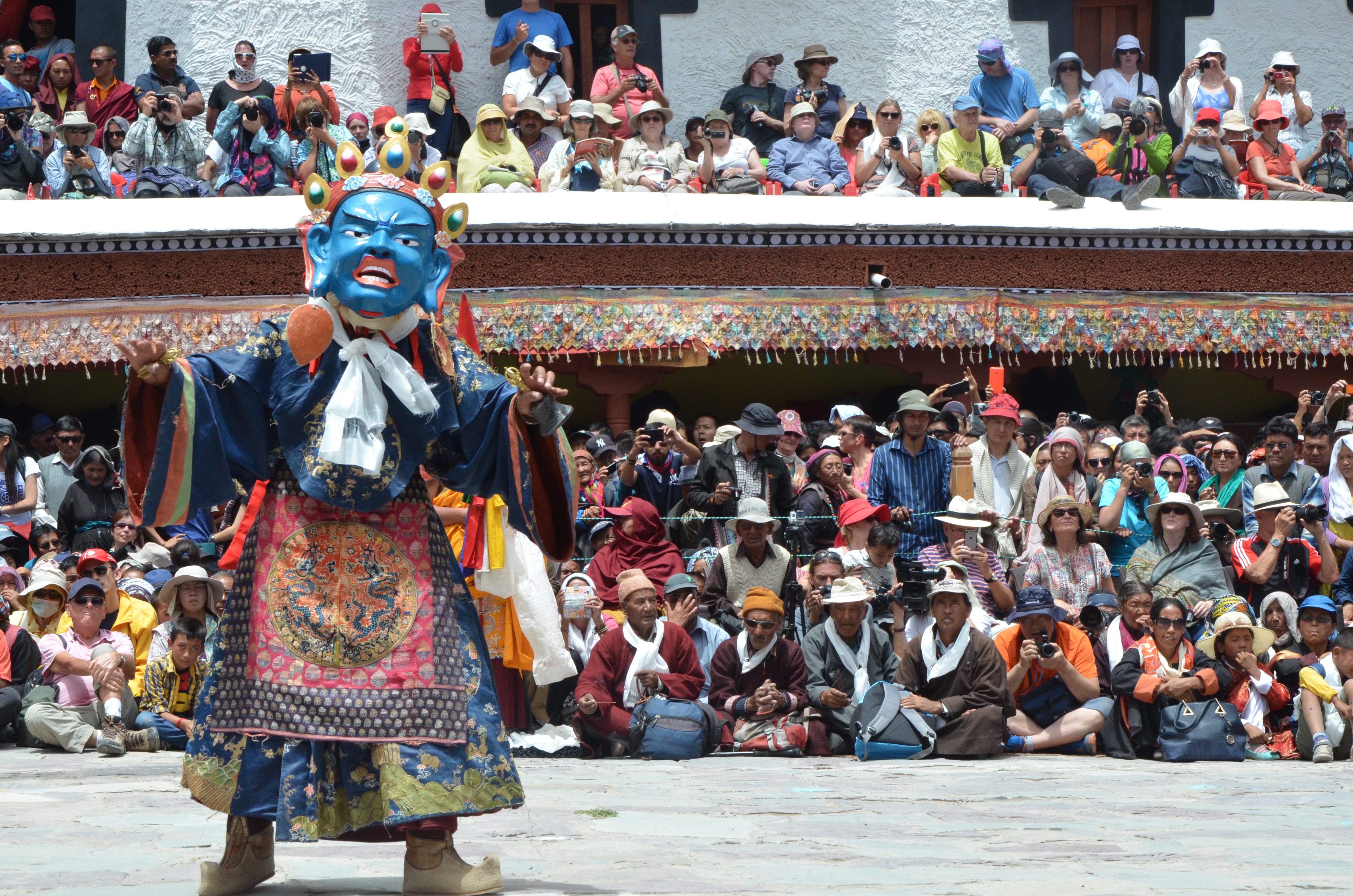
Last week, I wrote about ritual Buddhist dances within the larger Mahayana-Vajrayana tradition. I’d started that article by mentioning that in many Himalayan Buddhist cultures (by which I mean mainly Tibetan Buddhist cultures), such dances are still performed during important annual occasions.
The most famous of these is the Hemis Tsechu—the Hemis Festival—which is held every summer at the Hemis monastery in Ladakh. This is both a conventional summer festival (Hemis is not the only Ladakhi monastery to host a festival, merely the best known), but also a celebration of the life and legends of Guru Padmasambhava, the great 8th century Indian tantric monk who helped initiate the first spread of Buddhism into Tibet.
The Hemis Monastery
One of the earliest schools of Tibetan Buddhism, the Nyingma, takes its inspiration directly from Padmasambhava’s teachings, and the tantric Mahayana-Vajrayana synthesis is the supreme form of Buddhism practiced by this school and its subsequent branches, like the order of the Kagyus.
The Hemis Gompa (Tibetan for vihara, or monastery) is the main institution of the powerful Drukpa order of Bhutan and Ladakh, itself a branch of the Kagyus. Founded in the mid-17th century, Hemis is today the biggest and most influential monastery in the Indus Valley, home to over a 1,000 monks, and has more than 200 branch monasteries across the Himalaya.
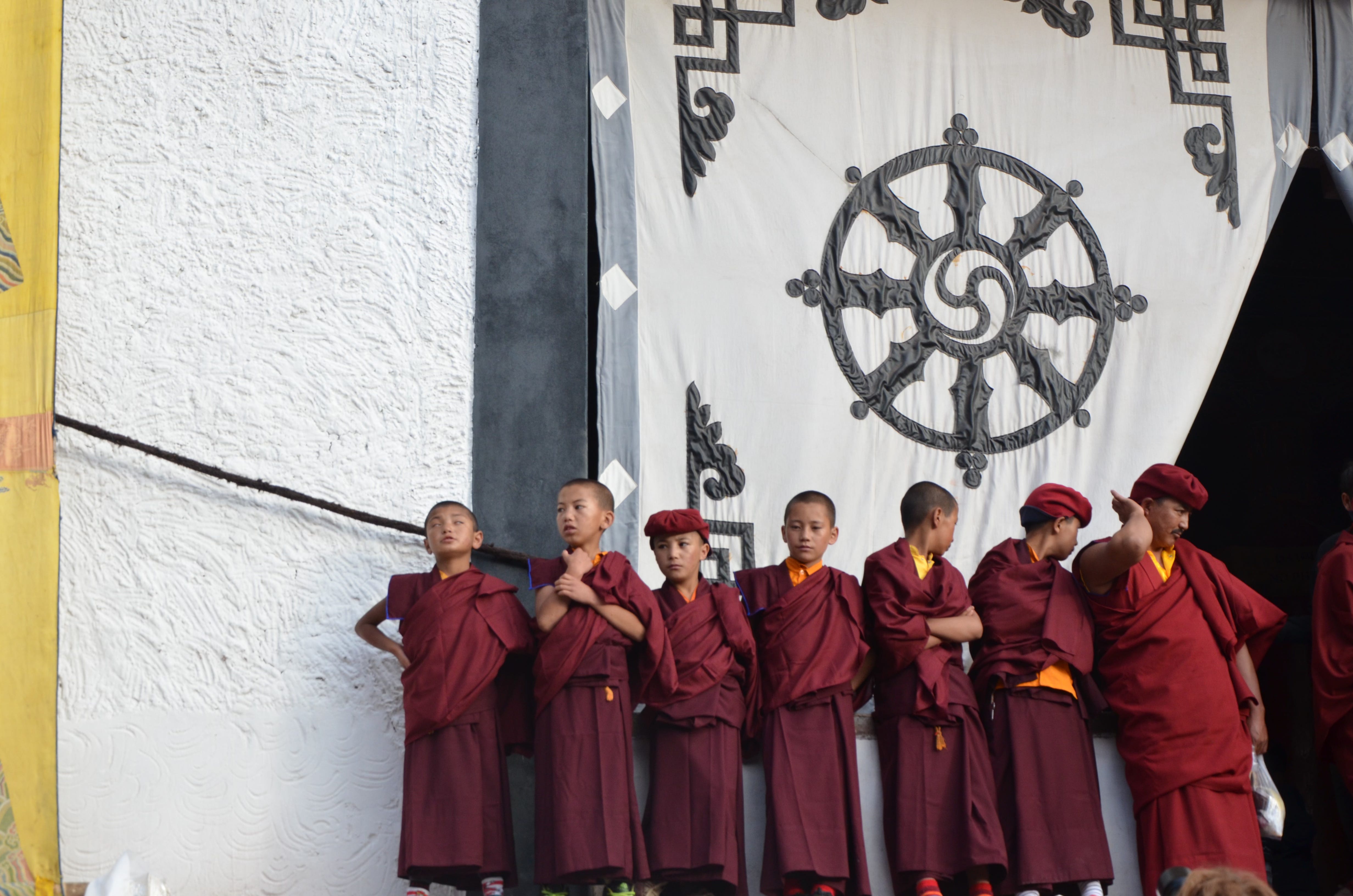
For generations, the heads of the Hemis Monastery served as the principal spiritual preceptor of the Namgyal dynasty of Ladakh, a tradition that began with the monk Taktsang Repa, who became the guru of king Sengge Namgyal in the 1620s. The annual Hemis festival was established in the 1730s by a member of the dynasty, Mipham Dorje, who became a monk and is today popularly known as the Gyalsey Rinpoche.
While the festival is held every summer, a special performance takes place every 12 years during the Tibetan year of the Monkey. According to the Tibetan calendar, Padmasambhava is believed to have been born on the 10th day of Non (the fifth month of the Lunar calendar, Jyeshta in Sanskrit) of the Monkey year which comes around once every 12 years.
To mark this occasion, a special silk thangka (Tibetan for the Sanskrit pata or painting on cloth) of the great Guru—the painting is gigantic, about three storeys high—is displayed, and monks perform a famous masked dance (Chams in Tibetan) celebrating the life and deeds of Padmasambhava.
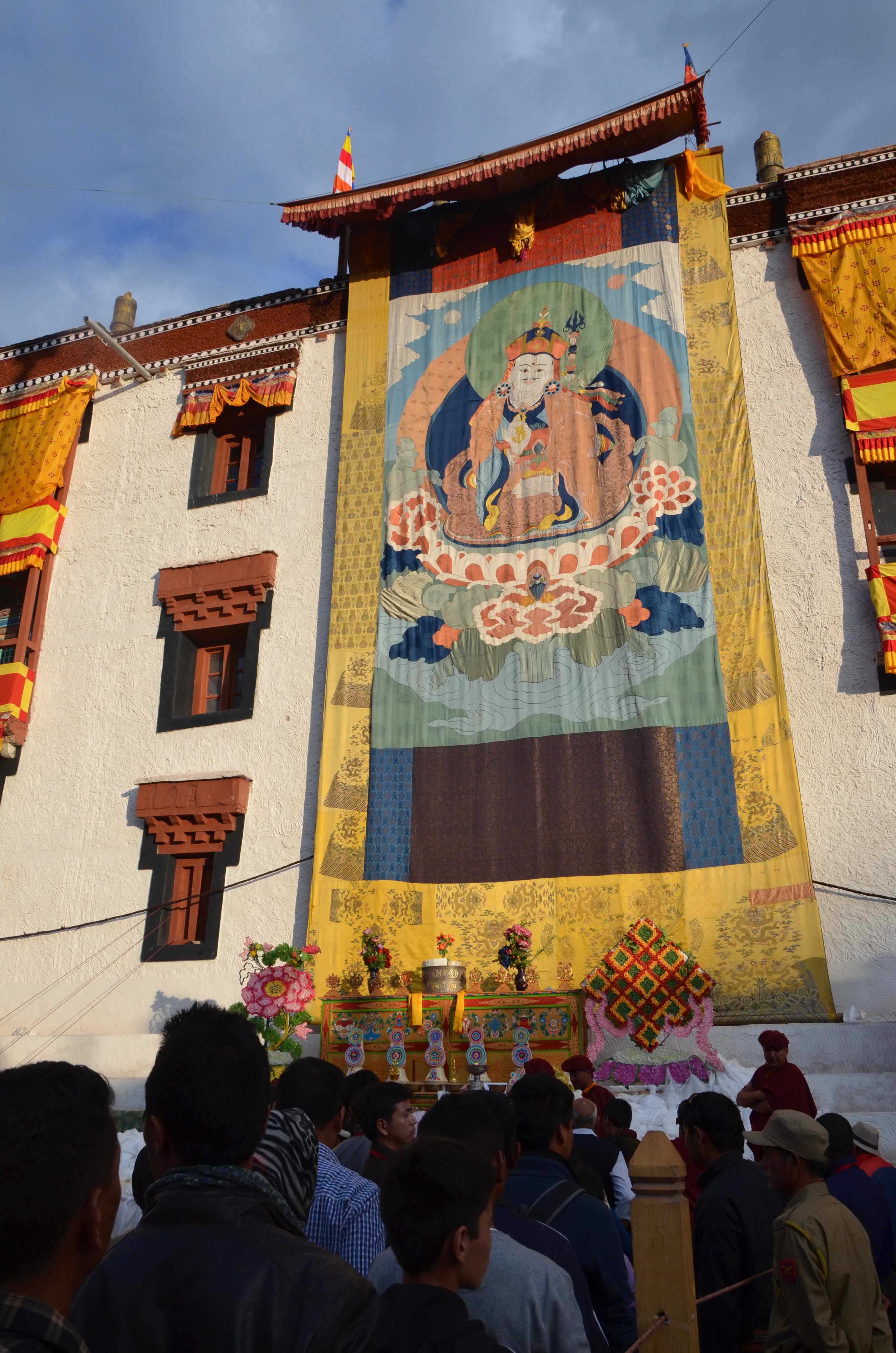
I visited Hemis for the last such occasion in 2016, and the sheer scale and splendour of the day’s festivities was a sight to behold. People had come in their thousands—from Ladakhis to tourists to high ranking Indian army commanders—and the giant courtyard of the monastery was buzzing with lines of people seeking blessings and Drukpa monks in maroon robes and berets managing proceedings.
The dramatic overhanging crags of the cliffside sheltering Hemis shone in the early morning sun, and the Padmasambhava thangka looked positively three-dimensional in its brightly-painted finery. The entire place was reverberating with deep blasts of two long Tibetan trumpets called dugchen, and the mantra recitation of monks, amplified through speakers set around the courtyard.
Whispers of a shared past
The dance performance itself didn’t start till about 11am, which gave pilgrims enough time for an hour-long hike to a hermitage set deep in the mountains above the monastery. Called the Gotsang, this is a large natural cave that has over the centuries become a favoured place for solitary meditation, or sadhana, for monks from the Hemis monastery. A monk I spoke to said people have been to known to spend up to a few years doing charjya (Sanskrit for “The Practice”—tantric rites and rituals of empowerment).
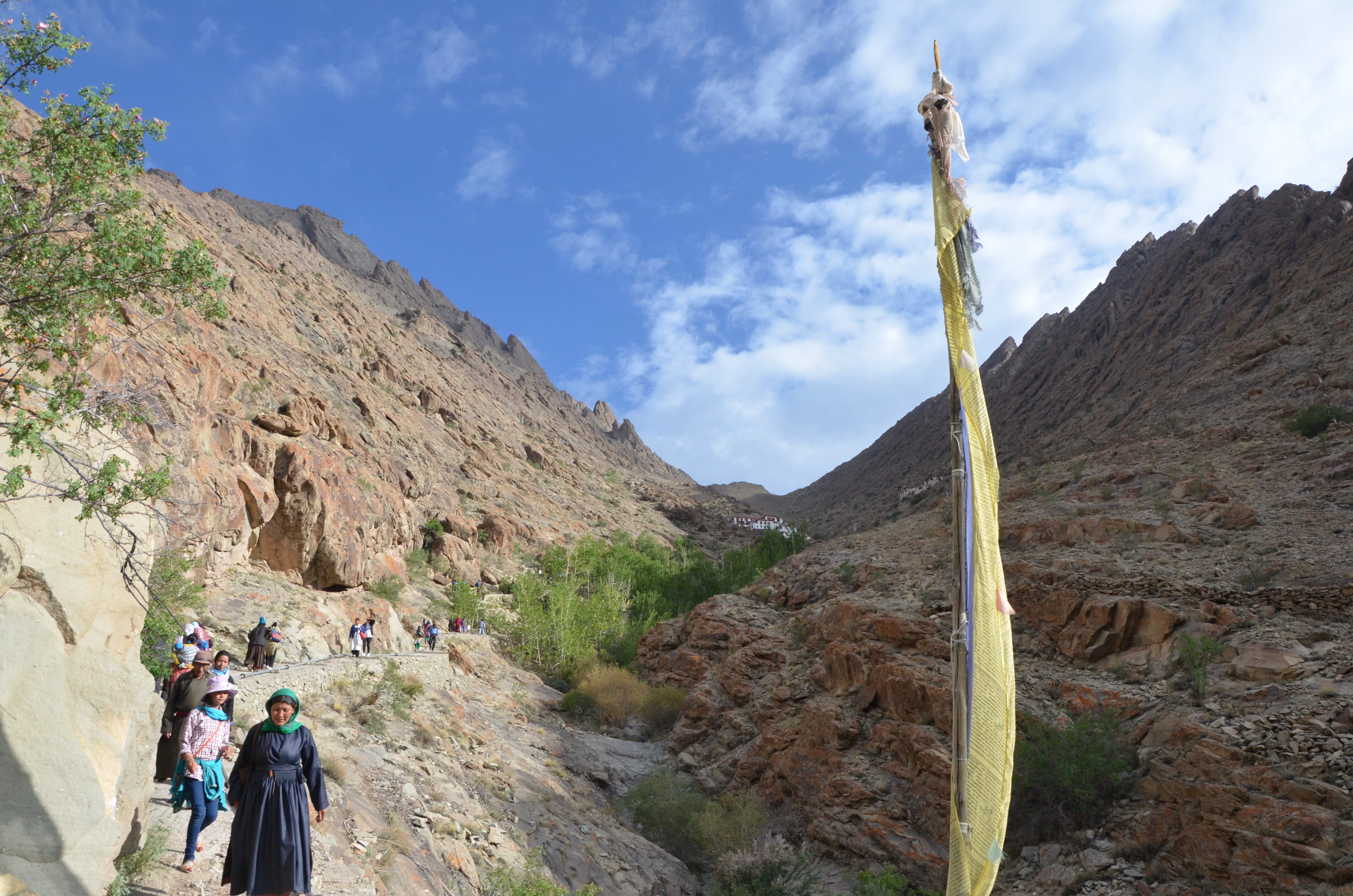
I joined other pilgrims going up to Gotsang, and once there, I saw many of these practitioners, dressed in black and with long hair and beards—visual markers that during the practice, their monastic identity is superseded by that of sadhakas. Pilgrims are especially eager to get their blessings, as if to receive a fraction of the spiritual power they have been amassing during their retreats.
In this, as well as the tradition of having a meditation retreat near a monastery but also reasonably far enough, one can easily draw a line from the now lost tradition of Mahayana-Vajrayana as it was practiced by monks, ritual specialists, tantric priests and normal householders in the Indian heartland.
You just need to visit the archaeological site of any major Buddhist monastic centre in India—like Kanheri in Mumbai, for example—to see evidence of clearly defined spaces for Mahayana monks and Vajrayana practitioners. The fact that people slipped seamlessly between the two spaces depending on their current spiritual modes (Mahayana monks or Vajrayana ritualist) is also well attested. In Hemis, it’s a thrill to see this ancient practice as a living tradition.
Holding space
A couple of hours later, I was back at the monastery, making my way through the crowds in the courtyard, trying to get a good vantage point. The start of the Chams performance was heralded with the clash of huge cymbals called bukjal and the beating of drums, conches and gyalings.
A procession of monks came down from the prayer hall and walked slowly round a flagstaff in the centre of the monastery courtyard, led by two musicians in high curving hats, playing gyalings. This was followed by two figures in yellow mask and robes, called hatuk. By their behaviour, it seemed that their job was to control the surging crowds of Ladakhis, Indian and foreign tourists from spilling into the performance space in as jovial a way as possible, joking and gesticulating at various members of the audience to stand back.
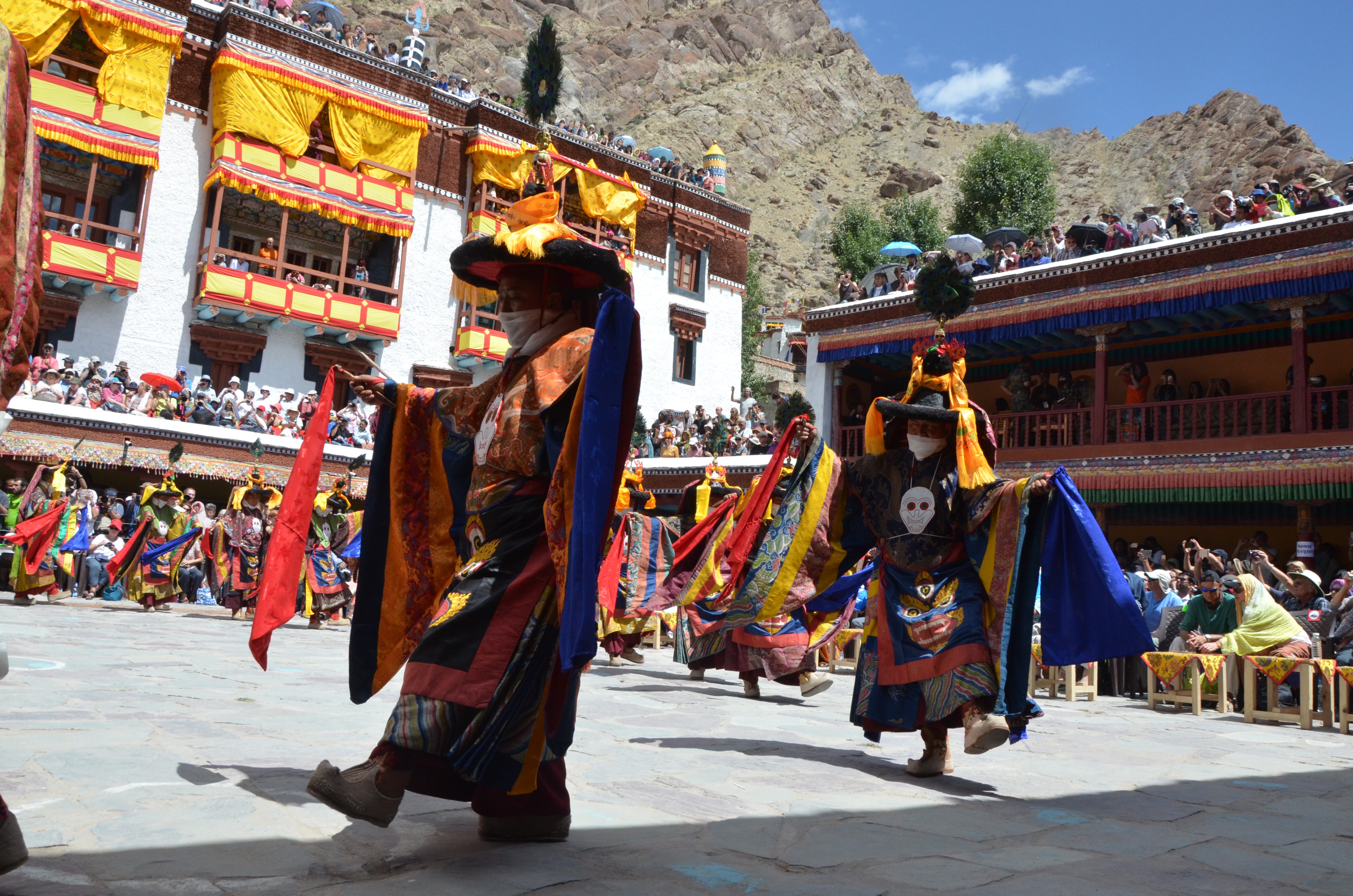
Then emerged the first of the dancers, thirteen monks clad in distinctive black hats with wide rims and full tantric regalia—all flowing capes and heavily embroidered robes. Wearing neckerchiefs with skull insignia, and accompanied by thundering clashes of cymbals and droning low chants from musician monks sitting in a balcony overlooking the courtyard, the 13 dancers proceeded to slowly make their way around the flagstaff, while displaying distinct gestures (mudra) and stances (abhinaya) with every move.
This dance, called the Muchmasu Guchod (Seemavadya Nritya in Sanskrit) or the Dance of Binding the Four Quarters, sets the limits of the sacred performance space, dispelling evil spirits and purifying the sacred area. Tibetan traditions claim this to be identical to the black-hatted tantric dance performed by Padmasambhava himself at the site of Tibet’s first monastery, Samye Gompa, in the 8th century. Nor is this difficult to imagine. As we have seen in my previous post on Tantric Buddhist dances, such performances are common amongst Newar Buddhists as well, and before them, Indian Buddhists.
The space having been secured, in what the tantric Buddhists call an ‘aura of light’, a monk ran around the courtyard carrying a pot of burning embers to seal the purity of the space.
Then came a group of 16 young monks in gilded copper masks. These were the compassionate Dakinis, divine women and possessors of all tantric knowledge (literally ‘those who fly through the sky’), led by their queen, the great tantric deity Vajravarahi.
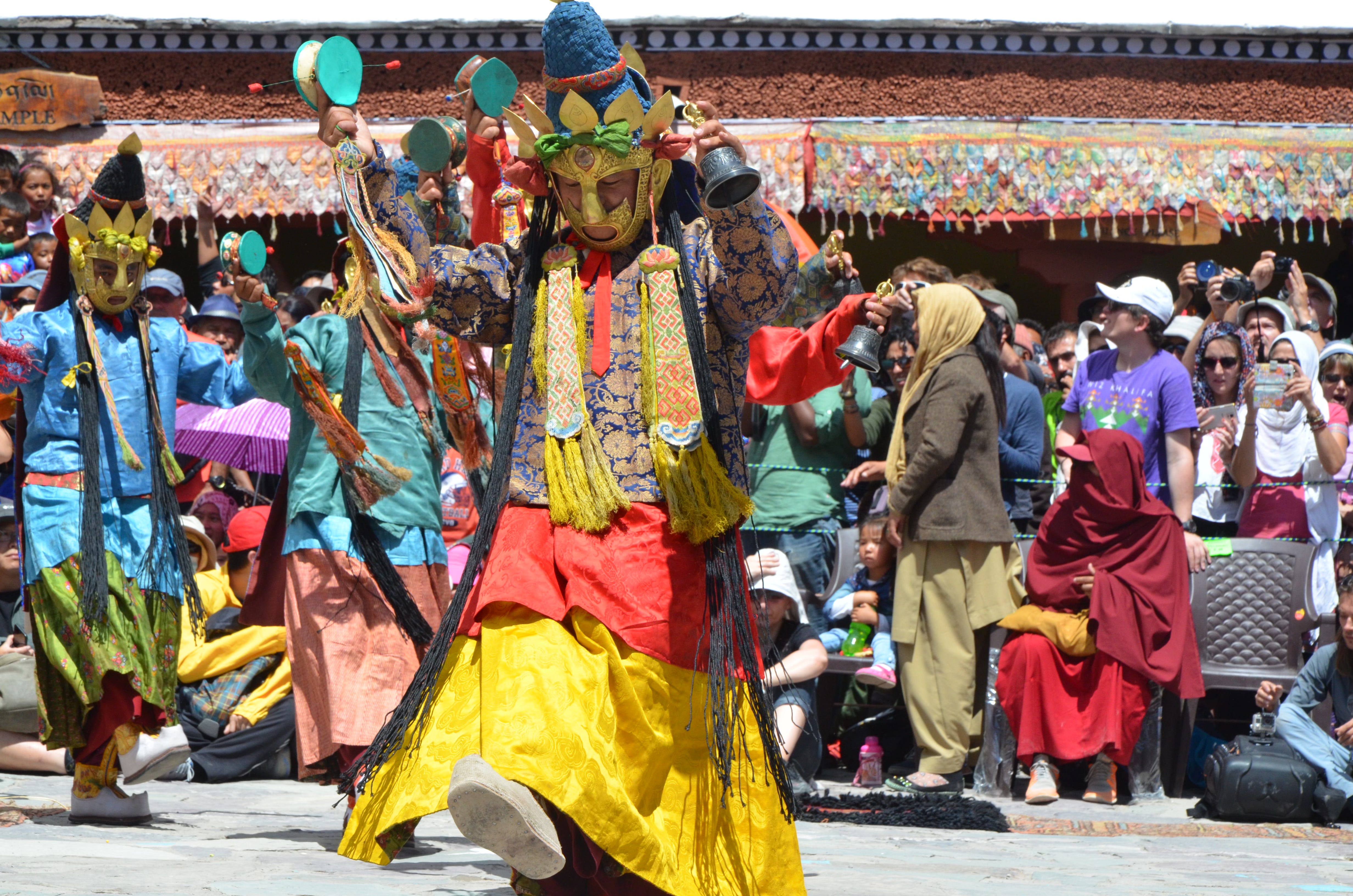
Holding small hand drums and the ceremonial bell symbolising both the feminine principle of Pragya or ultimate knowledge and Sunyata or emptiness, the monks danced in slow, mesmeric motions round the flagstaff, ringing their bells and sounding the small drums in an intricate rhythm. What I was witnessing was the dynamic creation of the mandala of Vajravarahi—a sacred ritual space animated by dancers enacting the roles of the various deities of the goddess’s mandala, purifying and binding the space as divine, safe from any harm, and therefore sacred. The monks on the balcony chanted Padmasambhava’s mantra in deep, reverberating tones, while cymbals crashed in sheets of white noise: “Om Vajra Guru Padma Siddhi Hum!”
Now that the requisite space had been created and sacralised, the main dance drama of venerating the eight manifestations of Padmasambhava could begin. But that’s a story for another time.
Select Bibliography:
The Tantric Dance of Dharma: The Masked Dances at the Hemis Festival of Ladakh by Madhu Khanna.
Monk, Householder and Tantric Priest: Newar Buddhism and its Hierarchy of Ritual by David N. Gellner.
Making Sense of Tantric Buddhism: History, Semiology, and Transgression in the Indian Traditions by Christian Wedemeyer.